Designing a Low-Latency, Adaptive Cybersecurity Simulator: A Hybrid Architecture of Stochastic Generation and Deterministic Validation
DOI:
https://doi.org/10.33998/processor.2026.21.1.2777Kata Kunci:
Sistem Pembelajaran Adaptif, Pendidikan Keamanan Siber, Mesin Keadaan Terbatas, Lingkungan Pembelajaran yang Digamifikasi, Generasi Konten ProseduralAbstrak
Pelatihan keamanan siber biasanya terganggu oleh kurangnya individualitas dalam hal skenario yang disajikan, yang cenderung membuat siswa menghafal daripada memahami. Dalam makalah ini disajikan NODEZERO, simulator berbasis browser untuk secara otomatis membuat konten pendidikan baru. Dengan menggunakan Riset Desain Sains, kami menciptakan Aplikasi Halaman Tunggal (Single Page Application) yang ringan yang menggabungkan algoritma pembangkitan prosedural dua bagian dengan Mesin Keadaan Terbatas (Finite State Machine/FSM) deterministik. Desain hibrida ini mengacak topologi jaringan dan pengaturan enkripsi, dan FSM memverifikasi apa yang dilakukan pengguna menggunakan sistem pemilihan alat berbasis keadaan. Hasil menunjukkan bahwa NODEZERO menghasilkan misi yang unik (tidak ada penundaan yang terlihat); waktu frame di bawah 16 ms. Tes fungsional menunjukkan bahwa Pengali Kesulitan (Difficulty Multiplier) menyesuaikan kompleksitas setiap misi untuk tingkat kesulitan: para ahli menerima tingkat kesulitan yang sulit dan pemula menerima tingkat kesulitan yang mudah. Penelitian menunjukkan bahwa kombinasi pembuatan lingkungan secara stokastik dan validasi deterministik adalah solusi "pengeboran tak terbatas" yang terukur dan menghindari pembuatan konten manual.
Unduhan
Referensi
J. R. Gómez Niño, L. P. Árias Delgado, A. Chiappe, and E. Ortega González, “Gamifying Learning with AI: A Pathway to 21st-Century Skills,” J. Res. Child. Educ., vol. 39, no. 4, pp. 735–750, Oct. 2025, doi: 10.1080/02568543.2024.2421974.
H. Qudsi, “GAMIFICATION IN EDUCATION: BOOSTING STUDENT ENGAGEMENT AND LEARNING OUTCOMES,” ShodhKosh J. Vis. Perform. Arts, vol. 5, no. 4, Apr. 2024, doi: 10.29121/shodhkosh.v5.i4.2024.2542.
M. Farrokhi Maleki and R. Zhao, “Procedural Content Generation in Games: A Survey with Insights on Emerging LLM Integration,” Proc. AAAI Conf. Artif. Intell. Interact. Digit. Entertain., vol. 20, no. 1, pp. 167–178, Nov. 2024, doi: 10.1609/aiide.v20i1.31877.
K. Hou, J. Li, Y. Liu, S. Sun, H. Zhang, and H. Jiang, “KG-EGV: A Framework for Question Answering with Integrated Knowledge Graphs and Large Language Models,” Electronics, vol. 13, no. 23, p. 4835, Dec. 2024, doi: 10.3390/electronics13234835.
R. Sajja, Y. Sermet, M. Cikmaz, D. Cwiertny, and I. Demir, “Artificial Intelligence-Enabled Intelligent Assistant for Personalized and Adaptive Learning in Higher Education,” Information, vol. 15, no. 10, p. 596, Sep. 2024, doi: 10.3390/info15100596.
Y. Subbarayudu, G. Vijendar Reddy, M. Shankar, M. Ven, P. K. Abhilash, and A. Sehgal, “Cipher Craft: Design and Analysis of Advanced Cryptographic Techniques for Secure Communication Systems,” MATEC Web Conf., vol. 392, p. 01112, 2024, doi: 10.1051/matecconf/202439201112.
Y. R. Kim, J. Yang, Y. Lee, and B. Earwood, “Assessing Cybersecurity Problem-Solving Skills and Creativity of Engineering Students Through Model-Eliciting Activities Using an Analytic Rubric,” IEEE Access, vol. 12, pp. 5743–5759, 2024, doi: 10.1109/ACCESS.2023.3348554.
A. N. Ghanbaripour et al., “A Systematic Review of the Impact of Emerging Technologies on Student Learning, Engagement, and Employability in Built Environment Education,” Buildings, vol. 14, no. 9, p. 2769, Sep. 2024, doi: 10.3390/buildings14092769.
B. Nguyen-Viet, C. Nguyen-Duy, and B. Nguyen-Viet, “How does gamification affect learning effectiveness? The mediating roles of engagement, satisfaction, and intrinsic motivation,” Interact. Learn. Environ., vol. 33, no. 3, pp. 2635–2653, Mar. 2025, doi: 10.1080/10494820.2024.2414356.
L. Smirani and H. Yamani, “Analysing the Impact of Gamification Techniques on Enhancing Learner Engagement, Motivation, and Knowledge Retention: A Structural Equation Modelling Approach,” Electron. J. E-Learn., vol. 22, no. 9, pp. 111–124, Nov. 2024, doi: 10.34190/ejel.22.9.3563.
D. Kutzias and S. Von Mammen, “Recent Advances in Procedural Generation of Buildings: From Diversity to Integration,” IEEE Trans. Games, vol. 16, no. 1, pp. 16–35, Mar. 2024, doi: 10.1109/TG.2023.3262507.
A. Sarkar, M. Guzdial, S. Snodgrass, A. Summerville, T. Machado, and G. Smith, “Procedural Content Generation via Knowledge Transformation (PCG-KT),” IEEE Trans. Games, vol. 16, no. 1, pp. 36–50, Mar. 2024, doi: 10.1109/TG.2023.3270422.
K. Krishnamurthy et al., “Benefits of gamification in medical education,” Clin. Anat., vol. 35, no. 6, pp. 795–807, Sep. 2022, doi: 10.1002/ca.23916.
V. Salauyou and W. Bułatow, “Optimized Sequential State Encoding Methods for Finite-State Machines in Field-Programmable Gate Array Implementations,” Appl. Sci., vol. 14, no. 13, p. 5594, Jun. 2024, doi: 10.3390/app14135594.
B. M. Ampel, S. Samtani, H. Zhu, H. Chen, and J. F. Nunamaker, “Improving Threat Mitigation Through a Cybersecurity Risk Management Framework: A Computational Design Science Approach,” J. Manag. Inf. Syst., vol. 41, no. 1, pp. 236–265, Jan. 2024, doi: 10.1080/07421222.2023.2301178.
G. Kavallieratos, G. Spathoulas, and S. Katsikas, “Cyber Risk Propagation and Optimal Selection of Cybersecurity Controls for Complex Cyberphysical Systems,” Sensors, vol. 21, no. 5, p. 1691, Mar. 2021, doi: 10.3390/s21051691.
O. Withington, M. Cook, and L. Tokarchuk, “On the Evaluation of Procedural Level Generation Systems,” in Proceedings of the 19th International Conference on the Foundations of Digital Games, Worcester MA USA: ACM, May 2024, pp. 1–10. doi: 10.1145/3649921.3650016.
Y. Deng, Z. Zeng, K. Jha, and D. Huang, “Problem- Based Cybersecurity Lab with Knowledge Graph as Guidance,” J. Artif. Intell. Technol., Feb. 2022, doi: 10.37965/jait.2022.0066.
C. D. R. Navas Bonilla, L. M. Viñan Carrasco, J. C. Gaibor Pupiales, and D. E. Murillo Noriega, “The Future of Education: A Systematic Literature Review of Self-Directed Learning with AI,” Future Internet, vol. 17, no. 8, p. 366, Aug. 2025, doi: 10.3390/fi17080366.
J. A. Delello, W. Sung, K. Mokhtari, J. Hebert, A. Bronson, and T. De Giuseppe, “AI in the Classroom: Insights from Educators on Usage, Challenges, and Mental Health,” Educ. Sci., vol. 15, no. 2, p. 113, Jan. 2025, doi: 10.3390/educsci15020113.
N. Martin-Alguacil, L. Avedillo, R. Mota-Blanco, and M. Gallego-Agundez, “Student-Centered Learning: Some Issues and Recommendations for Its Implementation in a Traditional Curriculum Setting in Health Sciences,” Educ. Sci., vol. 14, no. 11, p. 1179, Oct. 2024, doi: 10.3390/educsci14111179.
Unduhan
Diterbitkan
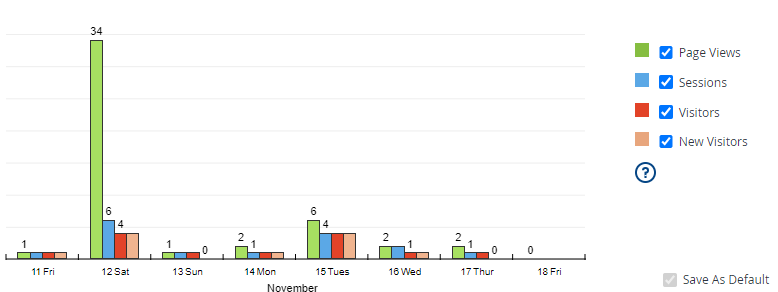
Abstract views:
PDF Download:
DOI:
10.33998/processor.2026.21.1.2777Dimension Badge:
Cara Mengutip
Terbitan
Bagian